
Label of Microscope: Parts of a Microscope Diagram (Free Printable Worksheet)
Table of Contents
Adding high-quality microscope worksheets into your science lessons is a great way to turn a complex technical lesson into an exciting hands-on learning experience. Here at Just Family Fun, we know that while the microscopic world is hidden from the naked eye, the tools we use to see it shouldn’t be a mystery. That’s why our label of microscope printables have been designed to act as the perfect way to empower new budding scientists.
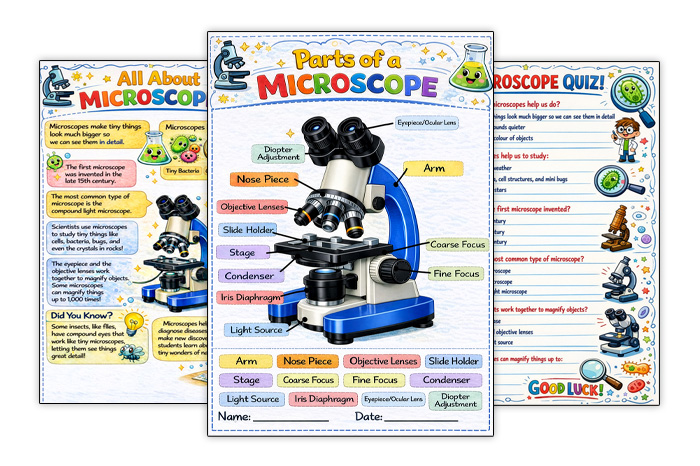
We use microscopes to unlock the hidden details of the world, revealing cells and microorganisms that are totally invisible to the naked eye. For budding scientists, a microscope is more than just a tool – it’s a window into a secret universe! But before they can dive into a slide, it’s important they know exactly how one works.
These microscope worksheets are incredibly beneficial for helping young learners to identify and memorise each component, from the eyepiece down to the base.
We know that black and white diagrams can feel a bit overwhelming, so we’ve made our printables bold and colourful to keep young minds focused and engaged. They are the perfect resource for a lively classroom session or a straightforward homework assignment.
What’s included in our free microscope worksheets
Inside this pack, you’ll find 6 high-quality worksheets that have been specifically designed to help young learners master science through a variety of recognition and memory building exercises. We know that teaching the “why” is just as important as the “how” which is why we’ve also included 2 specialised worksheets that explore the importance of the microscope and its real-world applications within the world of science. And to round out the learning experience, we’ve also provided a knowledge-testing quiz that allows children to show off what they’ve learned and can give you a great way to track their progress!
Microscope with Parts Labelled Diagram
This diagram is an easy-to-read visual guide designed to make it easier for young learners to understand each part of the microscope. By identifying complex components of the microscope, it helps children to build a solid foundation in microscopy. It’s a great reference tool that helps to boost confidence in lessons, ensuring young scientists can use their microscope safely and effectively while mastering the correct terminology.
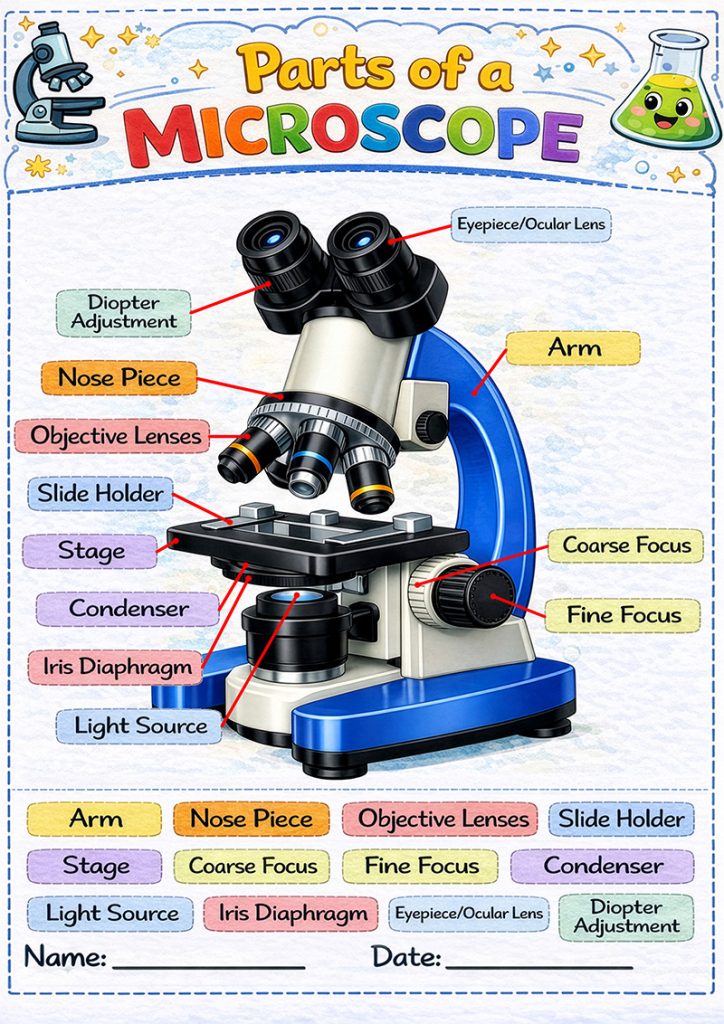
Microscope Blank Worksheet Diagram
This blank worksheet diagram is a hands-on activity designed to reinforce learning through active participation. By removing the labels, you can challenge students to recall and correctly place the parts of the microscope helping to build memory retention. It’s a great tool for classroom testing and home learning, allowing children to practice their skills until they can identify each part with confidence.
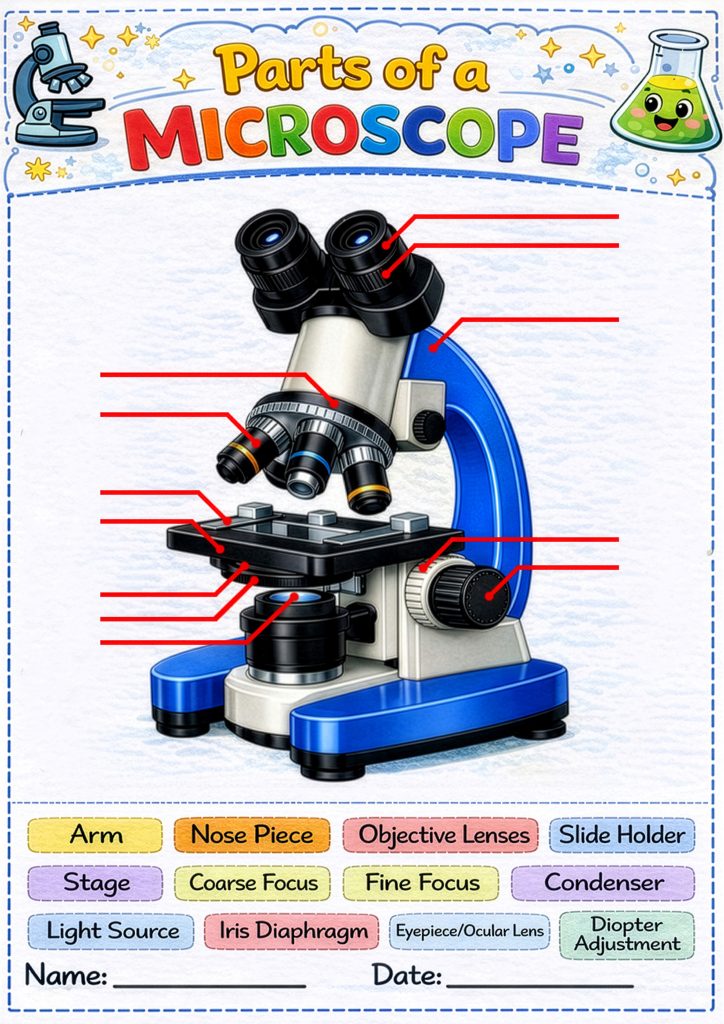
Label the Microscope Worksheet
This activity is designed to transition learners from observation to active recall. To make this challenge more effective, we’ve removed the guiding leader lines from the diagram to force students to rely on their own memory and awareness to determine where each part belongs.
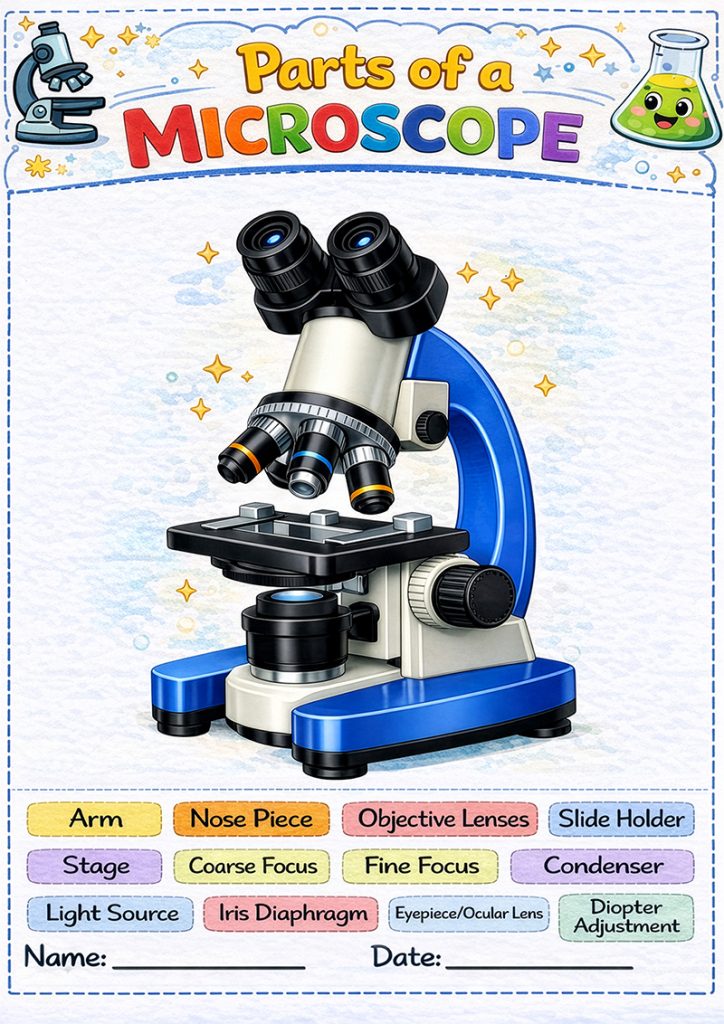
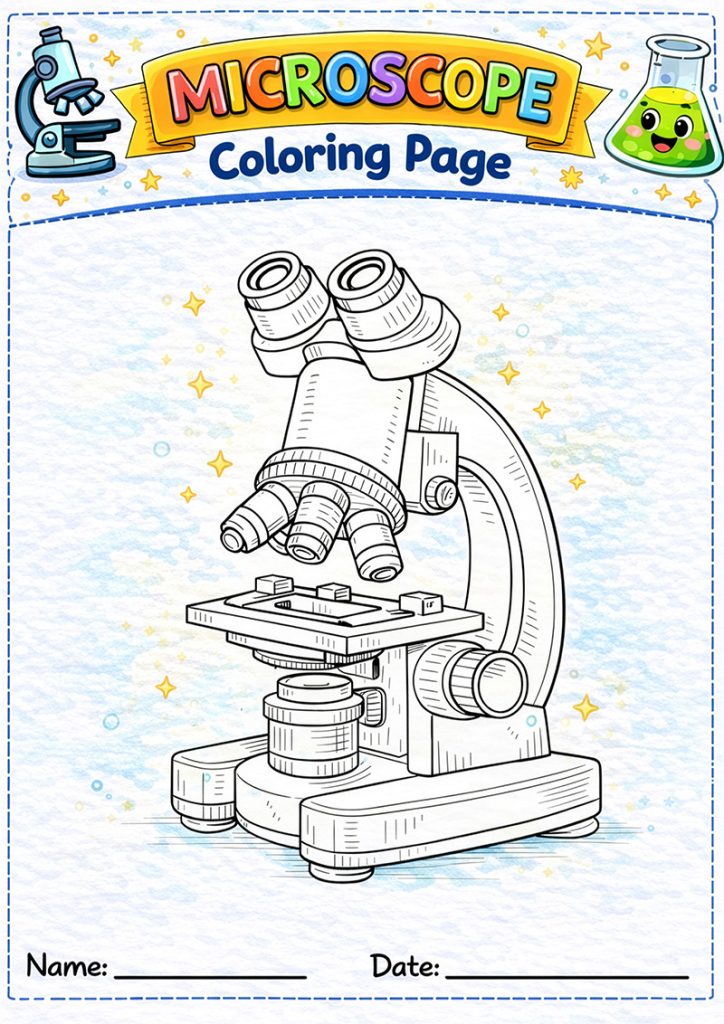
Microscope Coloring Page
Our Microscope Coloring Page is where creativity meets biology! This activity is a great, low-pressure way for children to understand scientific equipment through art. By coloring in the various sections of the microscope, they use tactile learning to build a mental map of the tool’s anatomy. It’s a relaxing addition to any science lesson that helps to bridge the gap between complex diagrams and hands-on discovery.
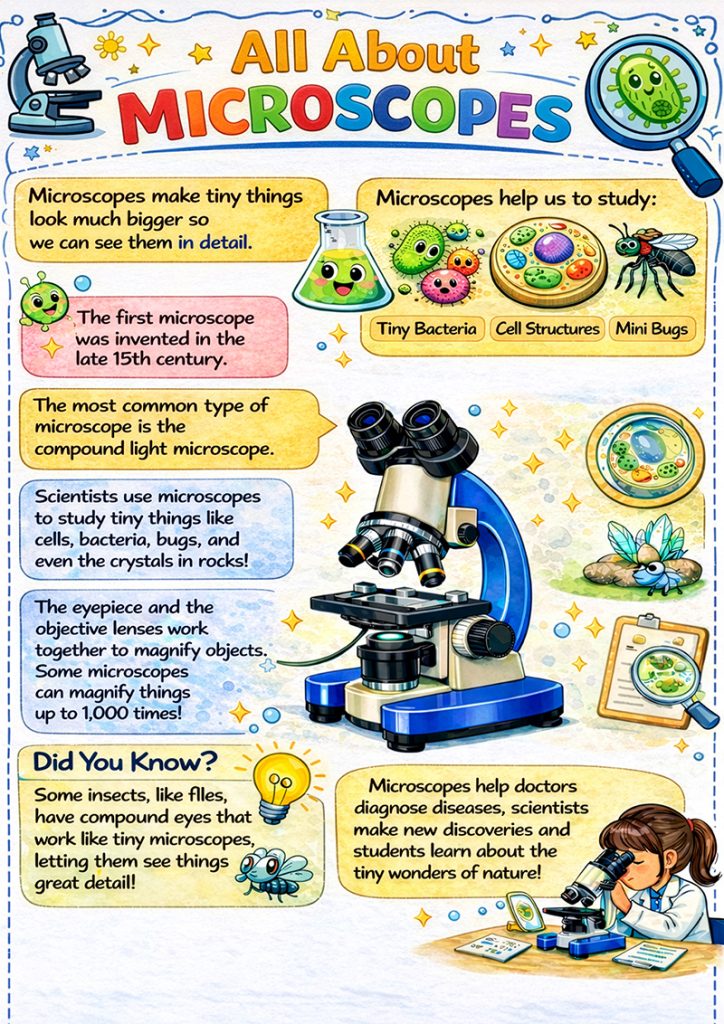
All About Microscopes Fact Sheet
This fact sheet is a great introduction to the world of microscopes! It breaks down complex science into bite-sized facts, explaining how microscopes magnify things like bacteria and cell structures. This sheet is an excellent resource to help provide real-world insight, showing students how scientists can make life-changing discoveries with their microscopes!
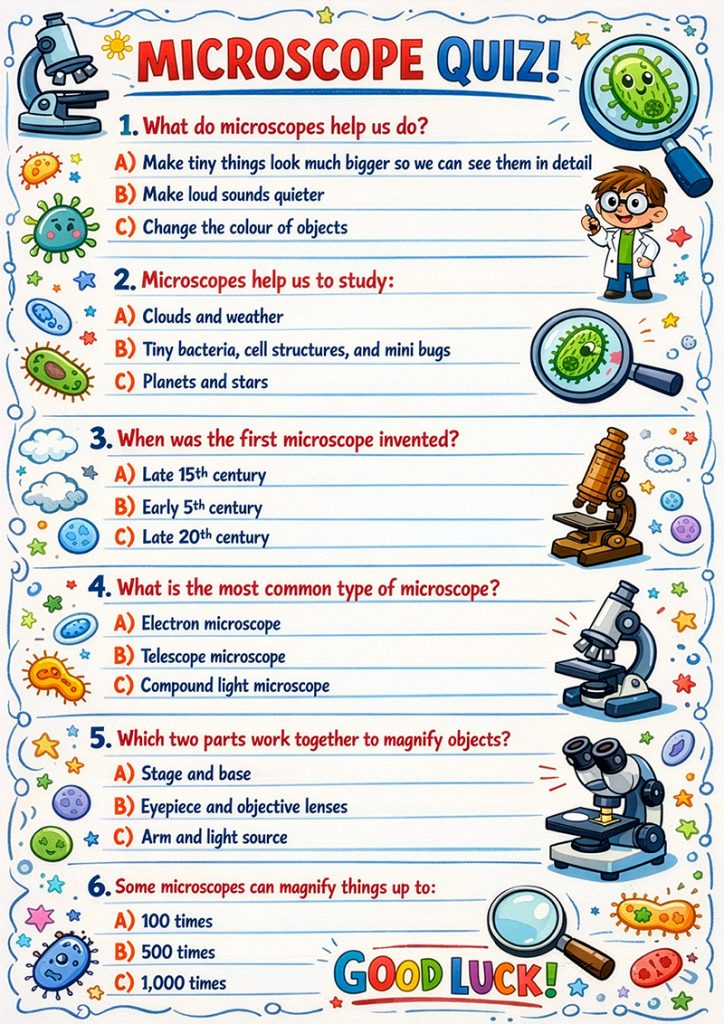
All About Microscopes Quiz Sheet
Our All About Microscopes Quiz Sheet is the perfect tool for wrapping up your science lesson with some friendly competition! This colourful, multiple-choice quiz allows students to demonstrate their understanding of what they’ve learnt.
Our Microscope Quiz Sheet is the ultimate tool for wrapping up your science.
By putting their new skills to the test, students solidify their memory and gain the confidence to handle real scientific equipment.
Do You Know What The Parts of A Microscope Do?
Have you ever wondered how a scientist transforms a tiny, invisible speck into a huge and detailed world? It all comes down to the incredible mechanics of the microscope. What might seem like a complicated piece of equipment is a balanced system of lenses, lights, and levers.
To help young learners understand the specific role of each component, we’ve outlined the breakdown of each part below:
- Eyepiece/Ocular Lens – this is scientists window into the micro-world! It’s the lens they look through to see the specimen and it usually provides a base magnification of 10x.
- Diopter Adjustment – not everyone’s eyes are the same! This adjustment allows you to alter the focus between the two eye pieces to compensate for differences in vision between the left and right eye.
- Arm – think of this as the backbone of the microscope! It’s a sturdy supporting piece mounted on the base that connects the head to the stage, making it the safest place to grip the microscope when carrying it.
- Nose Piece – the nose piece holds multiple objective lenses and rotates to allow people to easily switch between different magnification strengths.
- Objective Lenses – a microscope usually has 3 or 4 lenses with various strengths (ranging from low to high power) to allow scientists to zoom in on their specimen!
- Slide Holder – precision is key when it comes to the world of science! These clips keep the specimen slide in place, so it doesn’t move when you’re trying to observe it.
- Stage – this is the flat platform where the specimen slide is held for closer inspection.
- Coarse Focus – this is the larger knob on the side of the microscope. It moves the stage to help bring the specimen into focus.
- Fine Focus – once the image is visible, the fine focus knob takes over! It moves the stage in small increments to fine-tune the sharpness and bring out more intricate detailing.
- Condenser – hidden beneath the stage, this part of the microscope acts like a spotlight. It focuses the light coming from the source directly onto the specimen to ensure it’s bright enough to see.
- Iris Diaphragm – just like the iris of the eye, this opaque component uses adjustable blades to control the amount of light passing through the aperture, helping you to manage contrast and brightness.
- Light Source – every great discovery needs light! The light source provides the light necessary – either via a built-in bulb or through daylight directed through a mirror – to make the specimen more visible.
More Facts About Microscopes
Microscopes are more than just scientific equipment – they hold the key that unlocked many mysteries of medicine, biology and forensics. From the first invention in the 15th century to modern high-tech versions that can magnify objects up to 1000x, the history of microscopes is full of AHA moments!
- Ancient Beginnings
While humans had experimented with magnification for centuries, the first compound microscope was officially invented in the 16th century by two Dutch spectacle makers (and father and son team!) Hans and Zacharias Janssen. While initial microscopes offered low resolution and produced blurry images, they could magnify objects by up to 30x their size! - Helping Doctors Save Lives
Microscopes are essential in modern medicine. Doctors can use them to diagnose diseases by examining things like blood cells and bacteria. By seeing exactly what’s happening at a cellular level, they can create the right treatments to help people get better. - Electron Microscope Power
Normal microscopes can only magnify so much due to the wavelength of light but the electron microscope, invented in 1931 uses beams of electrons rather than light to allow magnification up to 1 million times! - Evolution of Microscopes
Microscopes continue to evolve, now incorporating technologies like optical coherence tomography and AI to push scientific boundaries further than ever before! - Flea Glasses?!
Did you know that early microscopes were nicknamed ‘flea glasses’ because they were used to inspect tiny insects like Fleas?
Microscopes FAQ
To wrap-up your lesson or homework session, we’ve listed some of the most common questions we get asked when introducing microscope worksheets to budding young scientists!
What’s the best age to start using microscope worksheets?
Our worksheets have been designed for primary and middle-school aged children. The bold colours and cut and paste activities make them the perfect resource for young learners, while the detailed labelling and quizzes are great challenges for older children.
How many worksheets are included in the free download?
We have 6 unique worksheets included in this free PDF bundle. They cover everything from identifying the physical parts of a microscope to understanding their history and real-world uses.
What is the most common type of microscope used in schools?
The most common type of microscope used in schools is the compound light microscope which uses a system of two lenses – the eyepiece and objective lenses – to magnify specimens up to 1000x.
How does a microscope work?
A microscope uses a combination of lenses to bend light, which makes a tiny object visible to the human eye. In a compound light microscope, the eyepiece and objective lenses work together to magnify the specimen.
What are the most important parts for a beginner to learn?
While all parts are important, beginners should focus on the eyepiece, the stage, and focus knobs. Understanding how to use different focus is essential for seeing a clear image without damaging the slide.
Why are these worksheets better than textbook diagrams?
At Just Family Fun we know that learning should be an engaging and rewarding experience. By using vibrant colours and removing some visual crutches like pre-drawn arms in the labelling section, we encourage active recall and better memory retention than compared with passive reading.
More Fun Worksheets For Kids
Learning doesn’t just have to stop at the microscope! At Just Family Fun we provide a variety of high-quality, engaging resources that make science and nature accessible for young explorers! Whether your child is looking up at the night sky or tracking the clouds outside their window, our growing library of printables is designed to turn every day into a discovery-filled adventure.
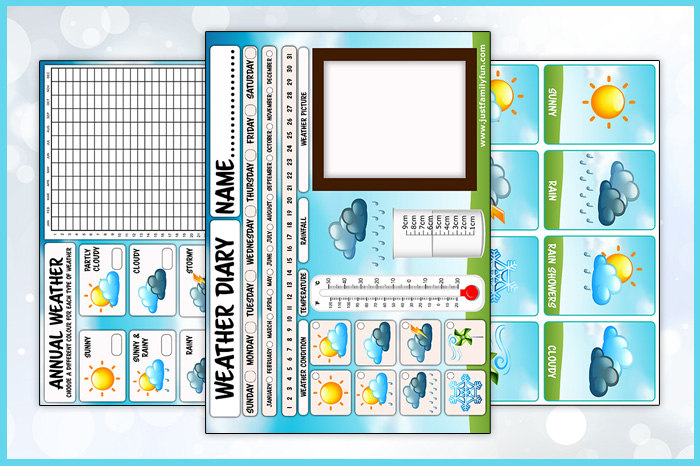
This free printable weather chart pack offers a hands-on way for little ones to track and discuss daily weather patterns. It includes an annual weather chart, a fun weather clock with movable hand, and flashcards that help to build your child’s vocabulary. Additionally, children can enjoy creative colouring sheets that feature various weather elements like sun, rain, and snow!
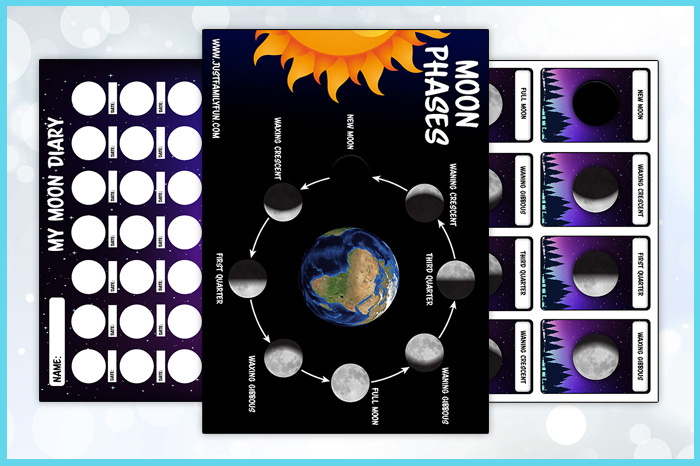
Explore the wonders of the moon with our high-quality moon cycle activities, perfect for classroom lessons or home fun. Our collection includes visual learning posters, interactive cut and paste activities, a moon tracking diary and flashcards so that little astronomers can turn learning into play.